
Central heating and radiators
Radiator installation and repairs, power flushing, system upgrades and modern heating controls.
Heating servicesUnderfloor heating
Even warmth from the floor up, no radiators on the walls, and lower water temperatures that suit modern boilers and heat pumps. We design, install, balance and repair wet and electric underfloor heating for single rooms, extensions and whole floors.
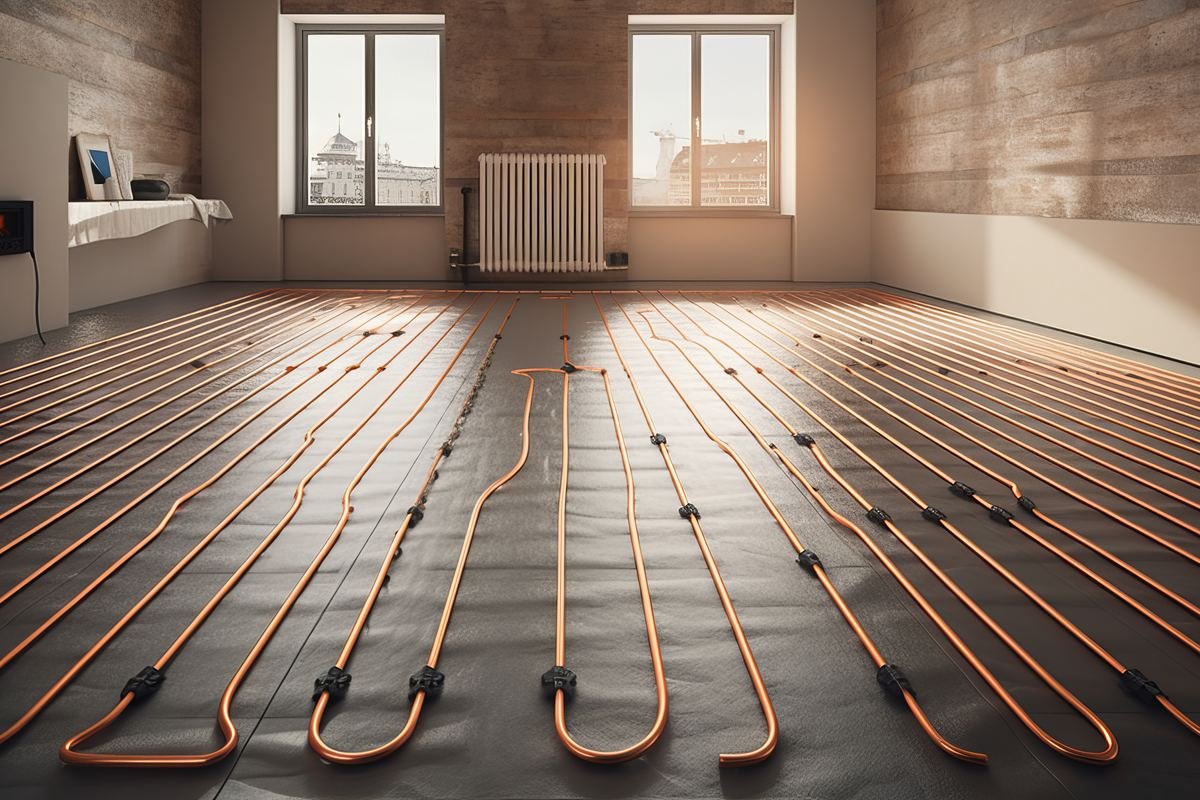
How it works
A wet system runs warm water, typically well below radiator temperatures, through loops of pipe under the floor. Because the whole floor gives off heat, the room feels comfortable at a lower air temperature, and there are no cold corners.
The manifold splits the flow between rooms. Each loop has its own flow setting, and each zone has its own thermostat, so a bathroom can be warm first thing while bedrooms stay cooler.
Electric systems use heating mats or cables under the floor finish. They are slim, quick to fit and a good choice for single rooms such as a bathroom or kitchen, where running a wet system from the boiler would be disruptive.
| Wet (water) | Electric | |
|---|---|---|
| Best for | Extensions, new builds, whole floors, renovations where the floor is being lifted | Single rooms, bathrooms, kitchens, conservatories |
| Running cost | Lower, especially with a condensing boiler or heat pump | Higher per unit of heat, but fine for small areas used for short periods |
| Installation | More involved: manifold, pipework, screed or plates | Quicker: thin mats or cables under tile adhesive or a levelling compound |
| Floor height | Needs depth for insulation and screed, or a low-profile overlay system | Adds very little height |
Underfloor heating has few moving parts, but manifolds, pumps, blending valves, actuators and thermostats can fail, and systems that were never balanced often heat unevenly. We diagnose cold zones, pressure loss, noisy pumps and failed actuators, and we can rebalance a system someone else installed. Where a pipe has been damaged, we locate it to keep the area of floor that needs lifting as small as possible.
Usually, yes. The manifold includes a blending valve that mixes the water down to the lower temperature underfloor heating needs, so it can run alongside radiators on the same boiler.
Tile and stone work best. Engineered wood, vinyl and carpet can all work if they are suitable for underfloor heating and the total thermal resistance of underlay and finish is kept low. Check with your flooring supplier and we will design around it.
Screeded systems respond more slowly than radiators, so they work best on steady timer settings rather than short bursts. Low-profile and electric systems warm up much faster.
Radiator installation and repairs, power flushing, system upgrades and modern heating controls.
Heating servicesCombi, system and regular boilers sized for your home, fitted, commissioned and registered, plus annual servicing.
Boiler installation and servicingTaps, toilets, pipework, leak detection, bathroom and kitchen plumbing, blocked drains and outdoor taps.
Plumbing servicesOpen 24 hours, 7 days a week
Phone for anything urgent. For quotes, landlord certificates and planned work, email us with a short description and a couple of photos if you can.